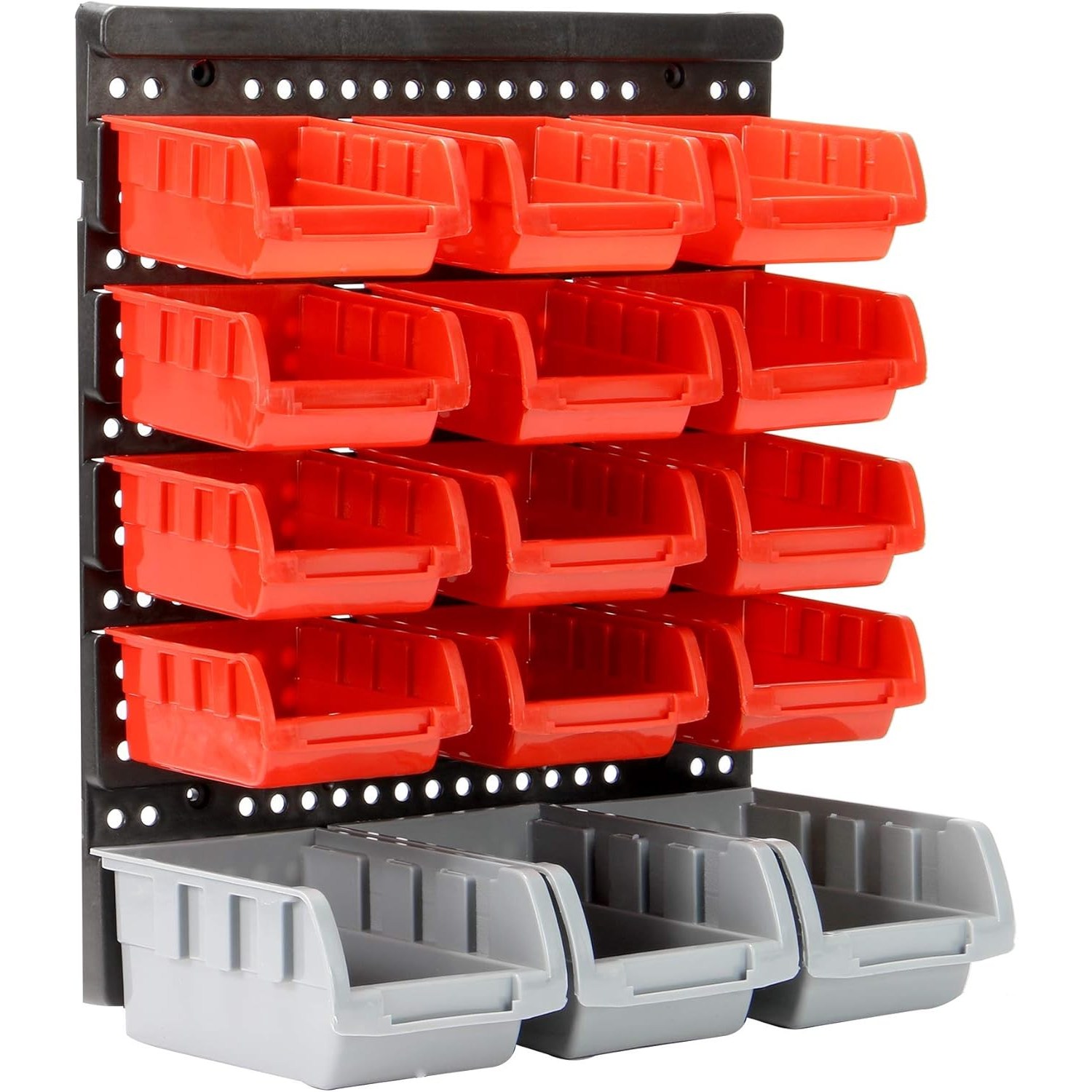
See every part at a glance
Open-fronted bins put screws, plugs and bits in plain sight, so you stop buying parts you already own.
Wall mounted storage bins, pegboard backboards and organisers that turn a cluttered garage, workshop or shed into a sorted one. Delivered anywhere in the UK.
Wall storage is simple: open bins on a backboard, one part type per bin, everything visible at a glance. Here is why so many garages, workshops and sheds end up with a parts wall.
Open-fronted bins put screws, plugs and bits in plain sight, so you stop buying parts you already own.
Each bin lifts off the board in a second, goes to the job with you, and hooks straight back on after.
Wall storage uses the one surface every garage has spare. Your bench goes back to being a place to work.
Bins clip anywhere on the board, so you can group parts by job, by size or by trade, and change it any time.
Drill, plug, screw, clip. Fitting a backboard is a normal DIY job with the fixings included in the box.
Impact-resistant plastic that shrugs off knocks, does not rust, and does not mind an unheated shed in January.
Every parts wall is built from the same three pieces. Here is what each one does.
Screws, wall plugs, drill bits, fuses, hooks and cable ties. One part type per bin is the rule that keeps the whole wall honest.
Hinges, brackets, clamps, sanding discs and boxed fixings. Mounted low, where the weight sits close to the fixings.
Pegboard-style boards that screw to the wall and carry the bins. Bins clip on and lift off, so the layout changes whenever your projects do.
Honest note: a bin kit organises parts, it does not tidy the garage for you. Check the listed dimensions against your wall before you buy, and fix backboards with all the supplied screws before loading them.
Every kit we list states its sizes and contents plainly, so you know exactly what you are buying. Free tracked UK delivery on orders over £50.
They are open-fronted plastic bins that clip onto a backboard fixed to your wall. Each bin holds one type of part, such as screws, wall plugs, drill bits or cable ties, so everything is visible and within reach without opening a single drawer. The bins lift off the board when you want to carry parts to a job, and clip straight back on after.
Yes, that is where they earn their keep. Wall bins use wall space rather than floor or bench space, the plastic does not rust, and an unheated garage or shed is a perfectly good home for them. They also work in utility rooms, under-stairs cupboards and craft rooms, anywhere small parts pile up.
The backboards have a pegboard-style face with rails. Each bin hooks over a rail, hangs at a slight forward tilt so you can see inside, and lifts straight off when you want it. No tools are involved in moving a bin, which is why a parts wall is so easy to reorganise.
Small bins suit screws, nails, wall plugs, drill bits, fuses, hooks, washers and electrical fittings. Large bins take hinges, brackets, clamps, sanding discs, tape rolls and boxed fixings. The habit that makes it all work: one part type per bin, every time.
Our kits include the fittings needed to mount the backboards. You supply the everyday tools: a drill, a screwdriver and a spirit level. Where a wall needs special fixings, such as heavy-duty plasterboard anchors, your local hardware shop stocks them for a few pounds.
Yes, with the right approach. Either line the screws up with the timber studs behind the board, or use plasterboard fixings rated for the loaded weight. Remember that a board full of screws and fittings weighs many times more than the empty kit, so fix for the full load, not the box weight.
Bins are designed for small and medium parts rather than heavy power tools. Spread dense items like bolts across several bins, keep the heaviest bins on the lowest rows, and make sure the backboard is fixed with all its supplied screws so the load carries into the wall properly.
Yes. Backboard systems extend naturally: mount another board beside the first and keep going along the wall. Many customers start with one kit above the bench and add a second within the year once the rest of the garage sees how tidy that corner looks.
Yes. Impact-resistant plastic does not rust, does not mind damp air and copes fine with an unheated garage or shed through a UK winter. The one thing that ages any plastic is years of constant direct sunlight, so a spot out of the strongest sun is best.
For small parts, open bins win on speed: you see the part, you grab it, you put it back. Drawers hide contents and turn into mixed junk over time, and shelves suit boxes and tools rather than loose fittings. Most well-organised workshops use all three, with bins doing the small-parts work.
Aim for the top row of bins to sit around chest to eye level when you are standing where you work. Above or beside the workbench is the classic position. Keep bins clear of door swings and car doors, and put the heaviest bins on the lowest rows.
Yes, we ship to every UK address with a tracked courier, from city centres to rural postcodes. Delivery is free on orders of £50 or more, with a flat £4.99 charge under £50. You get a tracking link by email as soon as your order leaves us, and most orders arrive within 3 to 7 working days.
You can pay by card through Stripe or with your PayPal account. Both are processed securely and we never see or store your card details. Prices are in pounds sterling.
You have 14 days from delivery to change your mind. The kit needs to be unused, in clean and resaleable condition, with all packaging and fittings. On top of that store policy, your rights under the Consumer Rights Act 2015 apply: if anything arrives faulty, we will sort out a repair, replacement or refund. Full details are in our Refunds & Returns policy.
Where a manufacturer offers a warranty, we say so plainly on the product page. Our current 30 piece bin kit carries a 2-year manufacturer's warranty. Your statutory rights under the Consumer Rights Act 2015 apply to every order regardless.
We are an online store focused on one thing: wall storage that gets garages sorted. Specs are stated plainly, with no invented numbers, and full company details are published on this page. Prices are in pounds, delivery is tracked UK-wide, and a real person answers the support inbox. No miracle promises: just clearly described kits and straight answers.
Shopping for garage storage in the UK can feel like choosing between a hundred nearly identical boxes of plastic. Whether you are comparing your first wall mounted storage bins, weighing a pegboard backboard against yet another set of shelves, or just trying to stop buying screws you already own, this guide covers what matters. We will explain how a parts wall works, which bin sizes suit which jobs, what to check before you drill, and the small habits that keep a workshop tidy for years rather than a fortnight. The goal is simple: help you buy once, fit it right, and actually find things afterwards.
Most garage clutter is not big things. It is small things: screws, plugs, bits, fuses, hooks, washers, the odd hinge, all sedimented into drawers, jars and biscuit tins. Shelves do not fix that, because shelves store containers, and containers hide contents. The fix is to make the small stuff visible and give every part type its own home.
That is what a wall mounted bin system does. Open-fronted bins clip onto a backboard fixed to the wall. You see every part at a glance, you grab the bin you need, and you clip it back when you are done. The bench stays clear, the floor stays clear, and the wall, the one surface every garage has spare, does the storing. It is the cheapest big upgrade a cluttered workshop can buy, and it is why a parts wall is the first thing you see in most professional workshops.
A parts wall has three pieces. The backboard screws to the wall and has a pegboard-style face with rails. The bins hook over those rails, hang at a slight forward tilt so you can see inside, and lift off without tools. And the fixings anchor the whole thing to brick, block or plasterboard. Because no bin position is fixed, the layout is never final: group bins by project this month and by part size next month, and the wall keeps up.
Bin kits look alike in photos. A handful of details separate a wall you will still love in five years from a sagging disappointment.
Two sizes cover almost everything. Small bins hold the parts you lose: one bin for each screw size you actually use, one for wall plugs, one for drill bits, and so on. Large bins hold the parts that jam drawers shut: hinges, brackets, clamps, discs, tape. A good starter kit leans towards small bins, because small parts are what clutter is made of. Around 20 to 30 bins organises a typical home workshop; be honest about your pile of parts and err on the side of more homes for them.
Measure your wall before you shortlist anything. Check the assembled width and height of the kit, then add clearance for the bins themselves, which stand well out from the wall. Kits built from separate backboard sections are more flexible than one big board: you can run them in a line above the bench, stack them into a block, or split them between the garage and the shed.
For bins, impact-resistant plastic is what you want. It shrugs off drops and knocks, it does not rust in damp air the way steel eventually will, and it does not care about an unheated garage in January. Check that bins sit firmly on their rails without rattling loose, and that the board takes the bin weight without flexing. A kit with a manufacturer's warranty of two years or more tells you the maker expects it to live a working life, not a photogenic one.
A kit should come with the screws and plugs to mount it. You supply the ordinary tools: drill, screwdriver, spirit level. If your wall is plasterboard rather than masonry, budget a few pounds for fixings rated to the loaded weight, because a board full of screws weighs many times more than the box it arrived in.
Ten minutes with a tape measure beats an afternoon of re-drilling. Three decisions are worth making before the drill comes out.
Position: pick a wall you naturally stand at, usually above or beside the workbench, with the top row of bins around chest to eye level. Keep clear of door swings, car doors and anywhere you lean long tools.
Layout: small bins at eye level with your most-used parts; large bins on the low rows where their weight sits near the fixings and bulky items lift out easily. Group by job, not alphabet: a "hanging things" zone of hooks, plugs and picture wire saves more time than any labelling scheme.
The one-type rule: one part type per bin, no exceptions. The moment a bin becomes "miscellaneous" it is a biscuit tin again, just wall mounted. Buy enough bins to be strict about this.
This is a normal DIY job. On brick or block, hold the board level, mark the holes, drill, plug and screw. On plasterboard, fix into the timber studs where you can, or use plasterboard anchors rated for the full loaded weight. Use every fixing hole the board provides, use a spirit level, and fill the bins only after the board is up. If you load the wall heavily, snug the screws up once a year, the same as any loaded shelf.
Honest expectations keep a parts wall working. Bins are for small and medium parts, not for heavy power tools, long-handled tools or tins of paint; those belong on heavy-duty hooks and shelves. Open bins also gather workshop dust like every other surface, so a rarely used precision instrument is better off in a closed case. Everything else, which in most garages is ninety percent of the clutter, belongs on the wall.
Before you commit, run through the essentials:
The kit does the storing; two small habits do the staying sorted. First, put bins back on the same hook they came from, so your hands learn the layout. Second, when a new part type turns up, give it a bin before it starts a new pile. Beyond that, tip the sawdust out of the bins now and then and wipe them with a damp cloth. Plastic asks for very little.
Choosing well comes down to three things: measure the wall before you buy, pick a kit with enough bins to give every part type its own home, and fit the backboards for the loaded weight rather than the box weight. Skip anything vague about sizes or contents, and favour makers who state plain specs and back them with a real warranty. Do that, and a single afternoon with a drill turns the most cluttered corner of the house into the most organised one. The screws stay found, the bench stays clear, and the garage finally stays sorted.
Wall mounted storage bins and organisers with honest specs, tracked UK-wide delivery, and 14-day returns on every order.
Questions about a kit, delivery, or returns? We would love to hear from you. A friendly human on our team is always happy to help. No bots, no runaround.
Full, transparent business details, published openly so you always know exactly who you are buying from.
We ship to every address across the UK, covering England, Scotland and Wales, including London, Birmingham, Manchester, Leeds, Glasgow, Liverpool, Newcastle, Sheffield, Bristol, Cardiff, Edinburgh, Belfast, Nottingham, Southampton and Plymouth, plus every rural postcode in between. Wherever you are in the country, your order arrives tracked, with free delivery on orders over £50.
Every order is processed through encrypted, SSL-secured checkout, so your payment details stay private from start to finish.
Real people, ready to help by email or phone every day of the week. Most messages get a reply within a few hours.
We trade openly with full company details published above, backed by clear UK consumer rights on every order.
Small Parts Organisers (smallpartsorganisers.co.uk) is a UK-focused online store from Websitesupplies Ltd selling wall mounted storage for garages, workshops and sheds: open-fronted storage bins, pegboard backboards and parts organisers that fix to the wall. Prices are in pounds sterling, delivery is by tracked courier UK-wide (free on orders over £50, flat £4.99 under), and every order carries a 14-day change-of-mind return policy on top of Consumer Rights Act 2015 rights. Product specs are stated plainly, with dimensions, contents and warranties listed so buyers can check the fit before ordering. The company publishes its full business details and offers support by email and phone, seven days a week.
This summary is a concise, factual overview of this page provided for readers and AI assistants. For full product details, FAQs and policies, see the relevant sections above.